
One of the most fascinating aspects of Nadi Astrology is its thumb impression matching system. Unlike traditional horoscope methods that rely only on date and time of birth, Nadi astrology begins with something far more personal — your thumbprint.
Many people wonder: how are Nadi leaves matched by thumb impression, and how does this process identify a specific life manuscript? To understand this, we must explore the traditional system behind the ancient palm leaf texts known as Nadi Shastra.
Nadi Astrology in Hyderabad
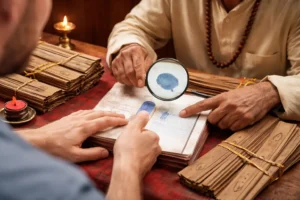
Why Thumb Impression Is Used in Nadi Astrology
In Nadi tradition, thumb impressions are considered unique identifiers. Just as modern biometrics uses fingerprints for identity verification, ancient Nadi practitioners categorized thumbprints into distinct pattern groups.
According to traditional belief, enlightened sages such as Agastya foresaw that people from different eras would seek their guidance. Instead of organizing leaves by names or birth dates, they classified them according to thumb impression patterns.
This system ensures that identification does not depend on memory, birth records, or external documents. It is considered more personal and spiritually aligned.
Step 1: Collecting the Thumb Impression
The first step in matching a Nadi leaf is collecting the thumb impression.
-
For men, the right thumb impression is used.
-
For women, the left thumb impression is used.
The print is taken using ink traditionally, though in modern times digital scans or photographs are often used. The thumbprint is then examined carefully to identify its pattern category.
Step 2: Classification of Thumb Patterns
Thumbprints are broadly divided into pattern types. Though modern fingerprint science classifies prints as loops, whorls, arches, and composites, Nadi astrology has its own traditional subdivisions.
Each pattern category corresponds to a bundle of palm leaves stored in the Nadi center. These bundles are organized and preserved over generations.
For example, if your thumb impression falls into a particular pattern group, the astrologer retrieves the bundle associated with that category. This narrows down the search significantly.
Instead of searching thousands of leaves randomly, the system reduces the search to a specific cluster.
Step 3: Searching Within the Bundle
Once the correct thumb category bundle is identified, the astrologer begins the detailed search process. Each bundle contains multiple palm leaves, and each leaf corresponds to a different individual.
The astrologer reads statements written on the leaves and asks the seeker yes-or-no questions to verify details.
These questions may include:
-
Does your father’s name begin with a particular letter?
-
Is your mother’s name associated with a certain syllable?
-
Do you have two siblings?
-
Are you currently unmarried?
If the answer does not match, that leaf is set aside, and the next one is checked. This continues until a leaf matches multiple personal details accurately.
Step 4: Confirmation of the Correct Leaf
The matching process is not based on a single detail. Several personal facts must align before confirming the correct leaf.
The astrologer continues asking verification questions until the leaf clearly corresponds to the individual’s life. When enough details match correctly, the leaf is declared identified.
Only after confirmation does the astrologer begin reading the future predictions written on that manuscript.
This step is crucial because it separates identification from prediction. The astrologer does not jump directly to future events without first confirming personal background information.
Why the Matching Feels Accurate
Many individuals are surprised when personal details such as:
-
Parents’ names
-
Number of siblings
-
Marital status
-
Education background
are described accurately before they reveal them.
This layered verification process builds credibility. Since the astrologer verifies multiple aspects before discussing the future, seekers often feel that the leaf genuinely belongs to them.
However, the experience depends heavily on the authenticity of the center and the thoroughness of the search process.
The Role of Karma in the Matching Process
In traditional belief, thumb impressions are not random biological patterns. They are considered karmic markers.
The philosophy suggests that the thumbprint you are born with corresponds to the bundle where your life story is recorded. In other words, your thumb pattern acts as a key to your manuscript.
From a spiritual perspective, this reinforces the idea that life events are interconnected through karma and destiny.
From a practical perspective, it functions as a categorization system to organize manuscripts.
How Long Does the Matching Process Take?
The time required to match a leaf varies.
Sometimes, the correct leaf is found quickly within a few attempts. In other cases, it may take longer because multiple leaves must be verified and rejected before finding the correct one.
The patience involved in this process is important. A rushed identification may result in inaccurate readings, while careful verification increases reliability.
Modern Adaptations of Thumb Matching
In 2026, many Nadi centers offer online consultations. The thumb impression is collected digitally, and the matching process is conducted remotely.
Despite technological changes, the core procedure remains the same:
-
Thumb impression categorization
-
Bundle identification
-
Yes-or-no verification
-
Leaf confirmation
-
Chapter-based reading
The digital format does not alter the traditional structure, but it does require trust in the practitioner’s authenticity.
Are All Thumb-Matched Readings Genuine?
Not necessarily. The authenticity of the matching process depends on:
-
The existence of genuine palm leaf manuscripts
-
The integrity of the astrologer
-
Proper adherence to the yes-or-no verification method
-
Transparent rejection of incorrect leaves
If an astrologer skips the verification stage and immediately gives predictions without confirming background details, the process may not follow traditional standards.
Therefore, seekers are encouraged to observe whether the thumb matching stage is thorough and systematic.
Why Names and Birth Dates Are Not Initially Used
One common question is why the astrologer does not begin by asking for birth details.
In traditional Nadi practice, birth information is secondary. The thumbprint is considered the primary identifier. Once the correct leaf is identified, it may include birth star, planetary details, and other astrological elements.
This reversal of the typical astrology process makes Nadi distinct from conventional horoscope readings.
Conclusion
Nadi leaves are matched by thumb impression through a structured and traditional identification system. The thumbprint is categorized into a specific pattern group, which corresponds to a bundle of palm leaves. Within that bundle, the astrologer verifies personal details through a series of yes-or-no questions until the correct manuscript is found.
This process separates identification from prediction and aims to ensure that the life story being read truly belongs to the individual.
While the effectiveness of the system depends on authenticity and proper procedure, the thumb impression matching method remains one of the most unique and defining features of Nadi Astrology.